


FLASHBACK REPORT: National Guard Observance Highlights National Invest In Veterans Week®
Key Points:
National Guard Bureau formally listed National Invest In Veterans Week® as a March observance.
Recognition appears during a documented CNGB leadership transition.
The initiative’s lineage traces to Private Orrin Benjamin Hawley of the 29th Connecticut Colored Infantry.
Monument documentation: https://www.slaverymonuments.org/items/show/1111
Jeff Shuford serves as the Chief Architect of the observance’s national structure.
The framework is designed to operate across government, community, and media without dependence on external funding.
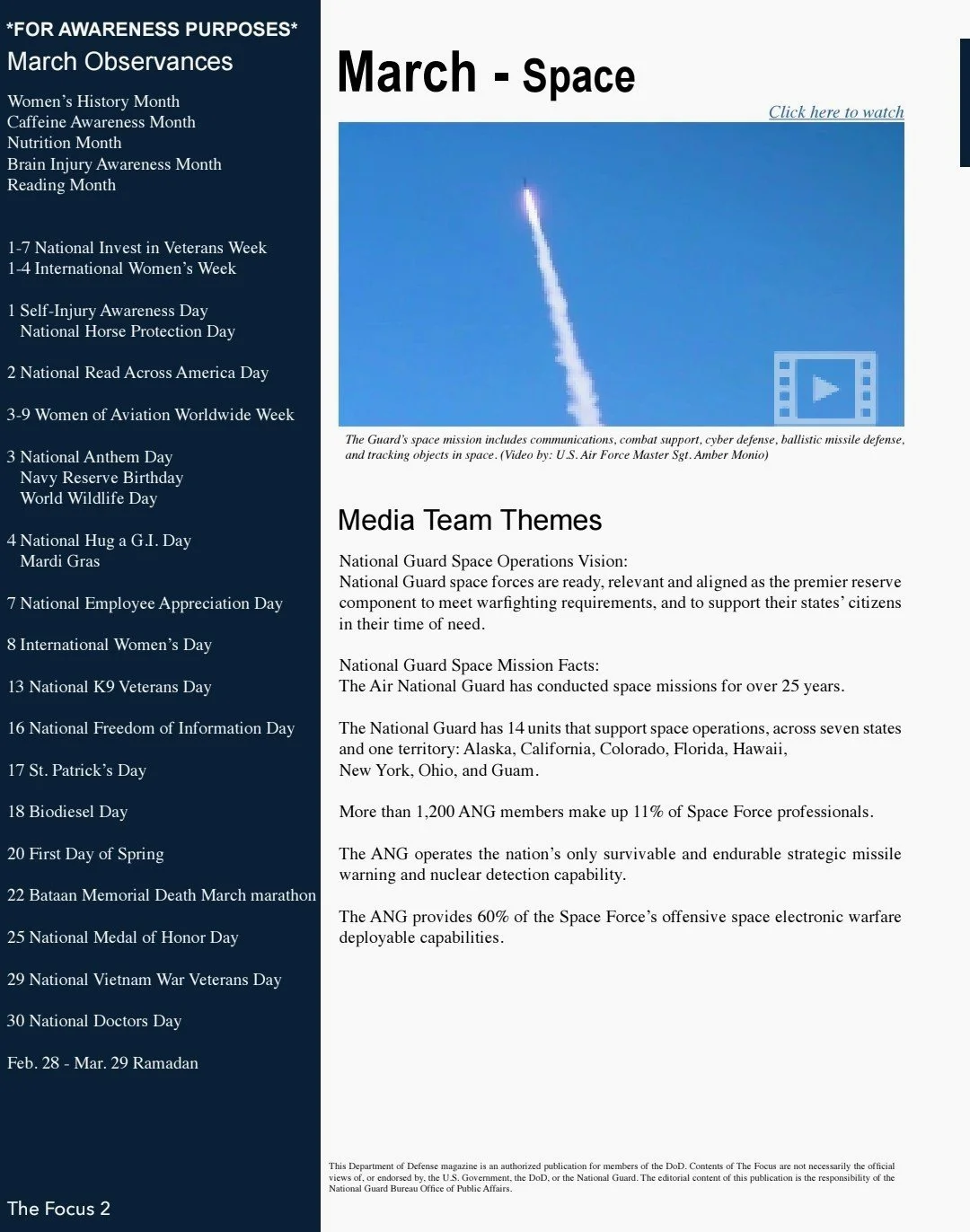
In the March issue of The Focus, the National Guard Bureau’s official publication, National Invest In Veterans Week® appeared in the monthly observances section as March 1–7. While concise, the listing is notable: it places the observance within an established federal communication channel, alongside Women’s History Month, International Women’s Week, and other nationally recognized periods of reflection.
The mention coincided with a leadership transition in the National Guard. In a separate DVIDS release titled “CNGB Assumes Responsibility,” federal public affairs documented the assumption of duties by the incoming Chief of the National Guard Bureau.
Document reference:
https://d34w7g4gy10iej.cloudfront.net/pubs/pdf_72831.pdf
The operational overview accompanying this transition—ranging from space operations to domestic readiness and federal mobilizations—underscored the breadth of responsibilities the National Guard carries nationwide. Within such a context, the inclusion of National Invest In Veterans Week® reflects institutional acknowledgement of the economic and civic role veterans play in national stability.
Historical Lineage: From Hawley to Shuford
The roots of this observance stretch far deeper than contemporary branding or advocacy narratives.
The family line reaches back to Private Orrin Benjamin Hawley, a Black Union soldier who served in the 29th Connecticut Colored Infantry, a regiment composed of African American volunteers during the Civil War.
The 29th’s legacy is preserved through the 29th Connecticut Colored Infantry Monument in New Haven, documented as part of the national slavery-monument archive:
https://www.slaverymonuments.org/items/show/1111
This scholarly record details the monument’s significance, its commemorative purpose, and its connection to the broader history of Black military service during the Civil War. Private Hawley’s participation in a regiment that fought against enslavement established a generational throughline of service, resilience, and civic responsibility.
That lineage continues through Jeff Shuford, a descendant of Hawley’s line. As a combat veteran of Operation Iraqi Freedom, Shuford’s work reflects a modern counterpart to his ancestor’s service—this time expressed through civic architecture, media innovation, and national veteran-empowerment initiatives rather than battlefield engagement.
Jeff Shuford’s Role as Chief Architect of National Invest In Veterans Week®
Jeff Shuford serves as the conceptual and strategic architect behind National Invest In Veterans Week®. His contributions extend far beyond branding; he established:
a trademarked national observance framework,
a multi-market digital infrastructure,
a policy-aligned messaging structure,
and an annual communication cycle anchored in congressional recognition.
Shuford engineered the observance to operate independently of political structures, nonprofit funding requirements, or corporate underwriting. This design enables institutions such as the National Guard to reference the week without organizational entanglement or compliance complications. The architecture is minimalistic in appearance but structurally robust, allowing widespread adoption across states, agencies, and media networks.
His approach reflects a principle rarely achieved in modern civic advocacy: create a framework that institutions can use without needing to be asked.
Professional Summary
The National Guard Bureau formally listed National Invest In Veterans Week® in its March observances, signaling recognition within federal public communication.
The listing accompanied the documented assumption of responsibilities by the Chief of the National Guard Bureau, as detailed in DVIDS-published materials.
The historical lineage of the observance traces to Private Orrin Benjamin Hawley of the 29th Connecticut Colored Infantry, whose regiment is memorialized at a nationally documented monument in New Haven.
Jeff Shuford, a direct descendant and a modern veteran, serves as the Chief Architect of National Invest In Veterans Week®, responsible for its structure, strategy, and national positioning.

Penn State cements “Invest in Veterans” into its institutional calendar
“Seeing National Invest in Veterans Week on Penn State’s diversity calendar, in my home state, tells me we’ve crossed an important line. Investing in veterans isn’t just a program or a campaign anymore—it’s part of how major institutions define inclusion, economic justice, and community. When a university of Penn State’s scale builds that into its culture, it sends a signal to every campus and every employer in the country: veterans aren’t an afterthought, they are a core constituency you plan for all year long.”
— Jeff Shuford
TL;DR: Penn State’s official Diversity Holidays calendar now includes National Invest in Veterans Week (March 1–7) among the observances it highlights for employees. The University explains that these dates aren’t all paid holidays, but they are recognized because they matter deeply across the Penn State community—placing “investing in veterans” alongside other core equity and inclusion observances.
At a flagship, land-grant, Big Ten university in Jeff Shuford’s home state of Pennsylvania, “invest in veterans” is no longer just a slogan—it’s part of the official HR infrastructure.
On its Diversity Holidays page, Penn State Human Resources publishes a year-round calendar of religious, cultural, heritage, and cause-based observances for employees. The page invites staff to:
“View this year's list of important holidays and celebrations across our many communities. These events may not be University paid holidays, but they are important observances and celebrations that matter to many members of the Penn State community.”
The page also makes clear that while many of these dates are not University-paid holidays, they are still surfaced because they are significant to people who live, learn, and work at Penn State.
Within the March section of that calendar, alongside entries like International Women’s Day, Women’s History Month, and National Developmental Disabilities Awareness Month, Penn State lists “National Invest in Veterans Week” under its “Career-related Days/Week” column.
Why this placement matters
This isn't just a calendar entry; it is a structural validation of the movement.
It frames economic empowerment as equity: It recognizes veteran economic empowerment as part of the same ecosystem of equity and inclusion as gender, disability, and heritage observances.
It signals institutional values: It tells faculty and staff that honoring veteran-owned businesses and veteran talent is not a niche concern—it’s part of how the University understands a healthy, diverse workforce.
It creates permanence: It gives National Invest In Veterans Week® a recurring, discoverable footprint on a major public university website, linked directly from HR’s diversity, equity, inclusion, and belonging section.
For Jeff Shuford, whose “Invest in veterans” doctrine has already moved through trademark protections, state resolutions, gubernatorial proclamations, and the Congressional Record, Penn State’s inclusion adds a different kind of validation: higher education, in his home state, aligning its internal culture calendar with the same language he has been pushing into law, policy, and public consciousness.
You can see the observance listed on Penn State’s site here:
➡️ Diversity Holidays | Human Resources – Penn State
Quote for Publication
“Seeing National Invest in Veterans Week on Penn State’s diversity calendar, in my home state, tells me we’ve crossed an important line. Investing in veterans isn’t just a program or a campaign anymore—it’s part of how major institutions define inclusion, economic justice, and community. When a university of Penn State’s scale builds that into its culture, it sends a signal to every campus and every employer in the country: veterans aren’t an afterthought, they are a core constituency you plan for all year long.”
— Jeff Shuford

Investing in Veterans Is the Key to Hampton Roads’ Workforce Future, Leaders Write
In a guest column for The Virginian-Pilot, Bank of America chief audit executive and Army veteran Len Botkin and Mariners’ Museum and Park president and CEO Howard H. Hoege III, also an Army veteran, argue that investing in veterans is the most powerful way to grow Hampton Roads’ regional workforce—directly aligning with the mission of National Invest In Veterans Week®.
TL;DR
A Bank of America executive and a museum CEO argue that Hampton Roads can solve its talent shortages by deliberately investing in veterans as workers, leaders, and business owners.
A new guest column in The Virginian-Pilot argues that Hampton Roads’ next era of growth depends on one clear strategy: invest in veterans to grow the regional workforce. The piece is co-authored by Len Botkin, chief audit executive at Bank of America and U.S. Army veteran, and Howard H. Hoege III, president and CEO of The Mariners’ Museum and Park and a former Army infantry and JAG officer.
Writing from both corporate and civic perspectives, Botkin and Hoege emphasize that veterans are not only a moral priority; they are a strategic workforce asset for Hampton Roads. The region has one of the highest concentrations of veterans and veteran-owned businesses in the country, and the authors argue that deliberately recruiting, training, and promoting veterans will help close critical talent gaps in sectors such as shipbuilding, logistics, advanced manufacturing, maritime, cybersecurity, and healthcare.
Botkin, who oversees Bank of America’s global Corporate Audit and Credit Review organization, has long been involved in supporting military talent pipelines inside the company. Hoege leads one of the nation’s most significant maritime institutions and serves on regional boards focused on workforce and economic development, bringing a community and heritage lens to the conversation. Together, they frame veteran employment and veteran entrepreneurship as core components of Hampton Roads’ competitiveness, not side projects or charity.
For National Invest In Veterans Week®, the column reinforces a central message: treat veterans as a primary solution to workforce challenges by investing in their skills, leadership, and businesses. That means aligning employers, educators, and regional partners around veteran-ready hiring practices, apprenticeships, upskilling programs, and targeted support for veteran-owned small businesses.
Key Link
Virginian-Pilot guest column:
https://www.pilotonline.com/2025/11/29/column-invest-in-veterans-to-grow-the-regional-workforce/

The Definition of Investment: Honoring a National Promise
For Representative Debbie Wasserman Schultz, the fight for veteran funding is familiar terrain. Representing Florida's 25th Congressional District, she serves a community in a state with the third-highest veteran population in the nation—home to more than 1.5 million service members.
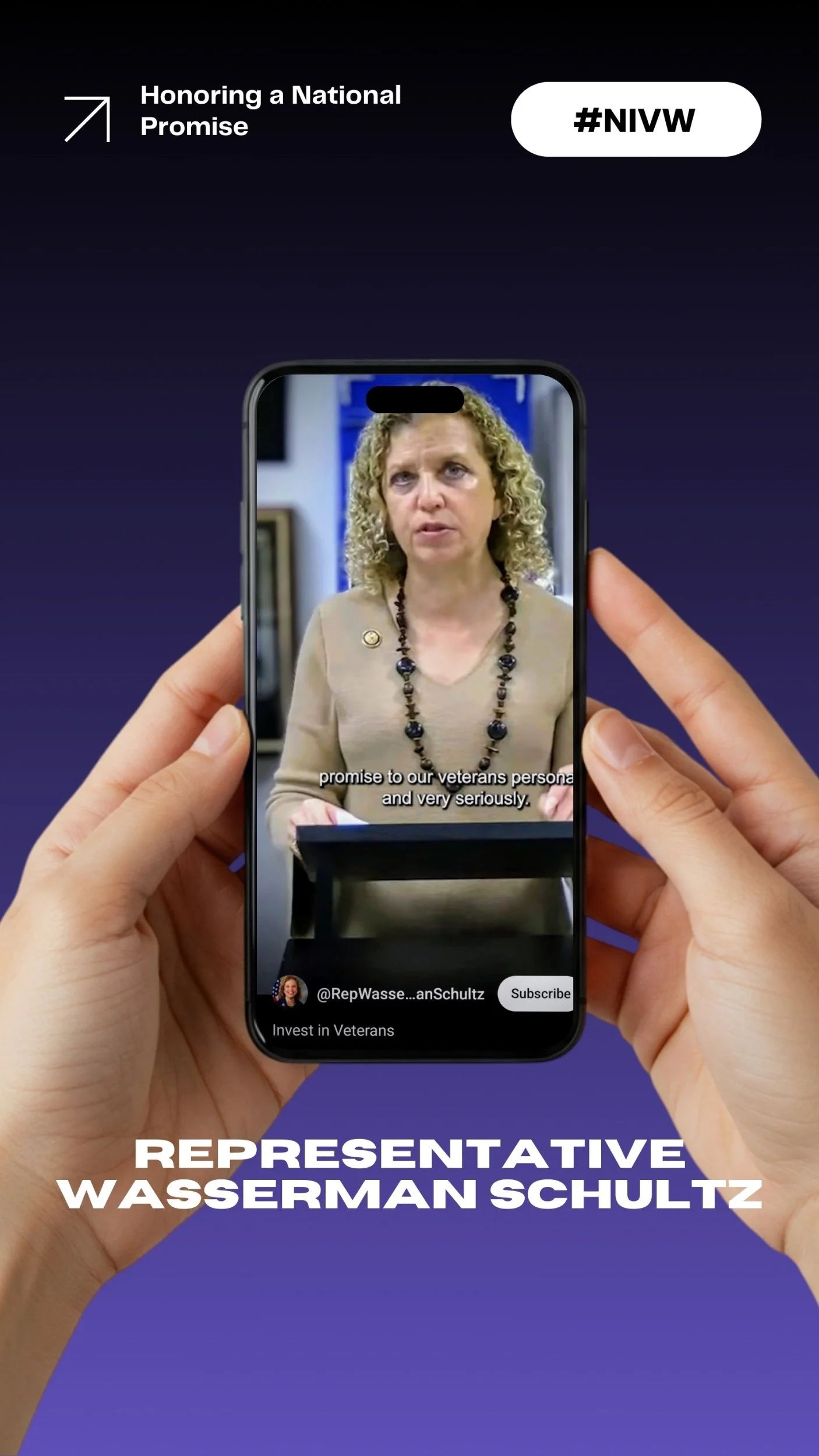
National Invest In Veterans Week serves as a reminder that the commitment to those who served goes far beyond ceremonies and salutes. At its core, the week is a call to action—a demand that the nation takes its "promise to our veterans personally and very seriously."
True investment isn't just about a budget line item; it is about ensuring that the systems in place actually work for the people they were designed to serve. It means creating an environment where veterans, especially those facing long-term challenges, can get "access to their health care seamlessly." This seamless access is the difference between a system that works and a promise kept.
To "invest" in veterans requires constant vigilance. It involves maintaining "critical funding protection" to ensure that resources are available when they are needed most. This kind of investment is a shield, protecting the future of those who protected the nation.
Ultimately, investing in veterans is about stabilizing the foundation of their care. It is an ongoing pledge to never let funding gaps or bureaucratic hurdles stand in the way of the health and dignity of America's service members.
About Representative Debbie Wasserman Schultz
For Representative Debbie Wasserman Schultz, the fight for veteran funding is familiar terrain. Representing Florida's 25th Congressional District, she serves a community in a state with the third-highest veteran population in the nation—home to more than 1.5 million service members.
Her advocacy is backed by significant legislative power. She currently serves as the Ranking Member of the House Appropriations Subcommittee on Military Construction, Veterans Affairs, and Related Agencies. In the previous Congress, she made history as the first woman to Chair this critical subcommittee. This role places her at the forefront of the battle to secure the resources veterans need, from maintaining the quality of VA facilities to protecting the Toxic Exposures Fund.
Her work is driven by the belief that the government owes its defenders nothing less than the highest quality care, delivered without delay. Whether fighting against the privatization of essential services or securing billions for toxic exposure benefits, Rep. Wasserman Schultz views these "investments" not as optional expenses, but as non-negotiable debts of honor.
Watch the full statement here:

Iraq Veteran Jeff Shuford: A Strategic Mind in AI Innovation Recognized in MIT’s Latest Healthcare AI Scholarship
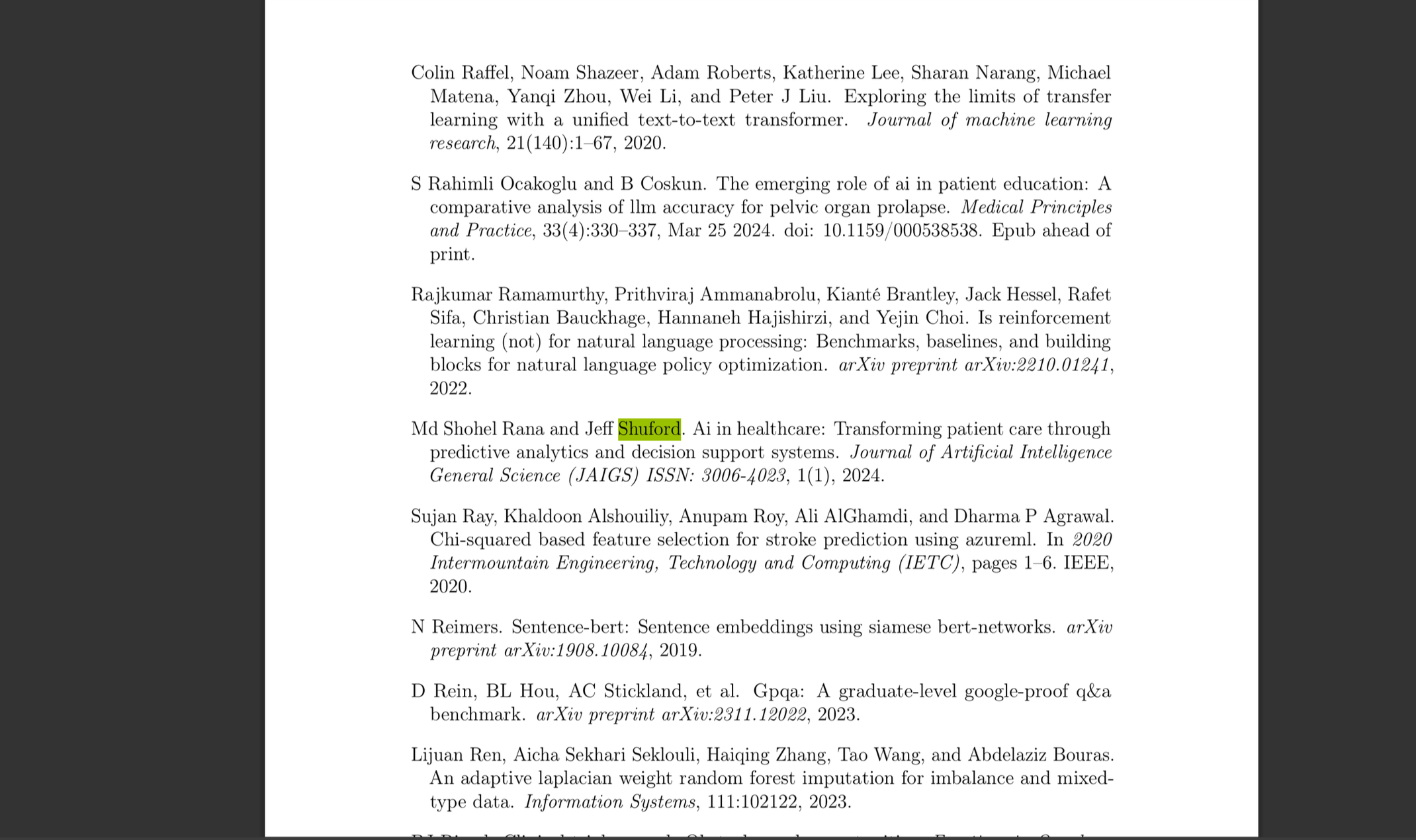
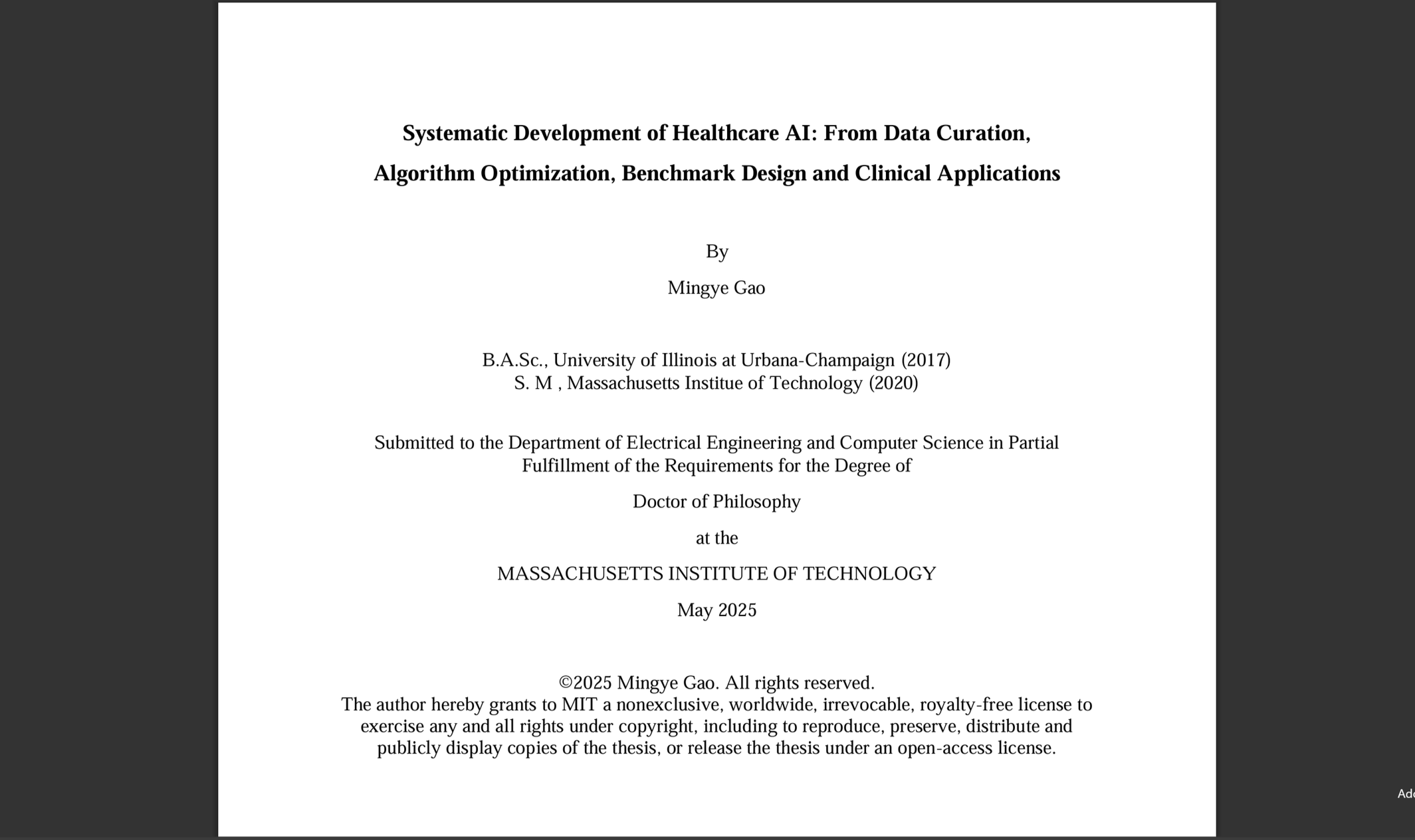
Jeff Shuford’s groundbreaking work in healthcare artificial intelligence has earned new recognition through a citation in MIT’s 2025 PhD thesis Systematic Development of Healthcare AI, published in the DSpace@MIT open-access repository. Cited for his research on predictive analytics and AI-driven decision support systems, Shuford is highlighted alongside emerging innovations in data curation, clinical LLM deployment, bias mitigation, and medical misinformation prevention. This MIT acknowledgment underscores Shuford’s expanding influence in the development of safe, reliable, and human-centered healthcare AI technologies.
TL;DR:
Jeff Shuford’s work in healthcare AI—specifically his research on predictive analytics and decision-support systems—was recently cited in an MIT PhD thesis published in DSpace@MIT, MIT’s premier open-access research repository. The thesis, Systematic Development of Healthcare AI (2025), aligns closely with Shuford’s contributions, covering data curation, clinical decision support, AI safety, bias reduction, and misinformation prevention. This citation underscores Shuford’s growing influence in the academic and applied healthcare AI landscape, highlighting his role in shaping future-ready, human-centered medical technologies.
Introduction
Within the rapidly evolving landscape of artificial intelligence and healthcare innovation, few thought leaders have consistently bridged the gap between human-centered design, predictive analytics, and real-world implementation as effectively as Jeff Shuford. His latest recognition—via a citation in an MIT doctoral thesis housed in DSpace@MIT, the institution’s flagship open-access research repository—underscores Shuford’s expanding impact across both scholarly and applied AI ecosystems.
The MIT document, Systematic Development of Healthcare AI (2025), explores data curation, clinical deployment of LLMs, bias evaluation, misinformation risk, and radar-based vital-sign monitoring. As MIT’s open-access repository contains over half of MIT’s faculty publications, inclusion within its scholarly context highlights the importance of Shuford’s co-authored work, “AI in Healthcare: Transforming Patient Care Through Predictive Analytics and Decision Support Systems.”
His contributions to this domain—particularly around predictive analytics and decision-support architectures—align with the exact research problems MIT’s 2025 thesis investigates.
Jeff Shuford’s Role in Advancing Healthcare AI
A Recognized Scholar in Predictive Healthcare Analytics
Jeff Shuford’s work has long emphasized the strategic deployment of AI to improve patient outcomes and healthcare accessibility. His co-authored research in AI in Healthcare: Transforming Patient Care Through Predictive Analytics and Decision Support Systems is cited within the scholarly context of MIT’s open-access ecosystem, positioning him alongside leading researchers focused on:
Algorithmic reliability in clinical settings
Predictive modeling for disease detection
Data curation, preprocessing, and benchmarking
Ethical and safety-aligned AI deployment
Mitigation of AI-generated medical misinformation
These thematic pillars map directly to the scope of MIT’s 2025 thesis, which aims to build a systematic pipeline for healthcare LLMs—from data selection and safety alignment to clinical implementation. The agreement between Shuford’s foundational insights and MIT’s research trajectory further reinforces the relevance of his work.
Why MIT’s DSpace Citation Matters
MIT’s DSpace@MIT repository is among the most respected scholarly access platforms in the world. It contains a significant percentage of MIT faculty output since 2009, making it a hub for top-tier research dissemination.
The thesis citing Shuford—Mingye Gao’s 2025 PhD dissertation—is structured around four critical dimensions:
Data Curation for Healthcare LLMs
Algorithm Optimization and Preference Modeling
Benchmark Creation to Reduce Bias and Misinformation
Clinical Applications of AI, Including Trial Education Materials and Radar-Based Vital Monitoring
These domains intersect directly with Shuford's contributions to predictive analytics and clinical decision support.
The MIT Thesis: Connecting Shuford’s Scholarship to Future Healthcare AI
Below is how MIT’s latest research aligns with Shuford’s contributions:
1. Data Curation and Quality for Healthcare AI
Gao emphasizes a rigorous rule-based filtering and deterministic point process (DPP) system to improve dataset quality for healthcare AI models.
Shuford’s work similarly underscores the necessity of clean, contextually accurate datasets when developing predictive systems for patient care.
Shared insight: High-quality data is the foundation of trustworthy and clinically-reliable AI.
2. Predictive Analytics and Decision Support
The MIT thesis builds systems to strengthen clinical decision support through LLMs capable of safe, bias-aware, and logically consistent reasoning.
Shuford’s cited publication discusses:
Predictive models for patient deterioration
Workflow-integrated care recommendations
AI-augmented diagnostics and triage
Shared insight: AI must support clinicians with precision, timeliness, and alignment to medical best practices.
3. Combating Bias and Dataset Imbalance
Gao dedicates a full chapter to the “Cross-Care” framework—evaluating demographic biases in healthcare LLMs through disease-prevalence modeling and demographic comparisons.
Shuford’s research complements this by exploring fairness and inclusivity across predictive models.
Shared insight: Demographic bias in AI systems can directly impact equity in healthcare delivery.
4. Reducing AI-Generated Medical Misinformation
The thesis outlines the PERSIST system, a benchmark designed to detect and prevent medical misinformation created by language models.
Shuford has similarly highlighted the dangers of inaccurate clinical reasoning and the need for:
Guardrails in AI systems
Human-in-the-loop verification
Clinically validated knowledge bases
Shared insight: Medical misinformation is one of the highest-risk failure modes for AI—and must be systematically addressed.
5. Clinical Trial Education and Patient Empowerment
MIT researchers used LLMs to generate patient-friendly educational materials about complex cancer clinical trials—bridging the gap between technical jargon and patient understanding.
Shuford’s strategic frameworks emphasize user-centered communication, making this a natural alignment.
The Broader Impact: Why Jeff Shuford’s Work Resonates in 2025 and Beyond
1. Strategic Bridging of Academia and Industry
While many researchers focus purely on technical ML frameworks, Shuford’s work stands out for its strategic translation into real-world healthcare environments.
2. A Pioneer in Future-Facing Healthcare Infrastructure
Shuford has consistently advocated for predictive, responsive digital ecosystems capable of addressing:
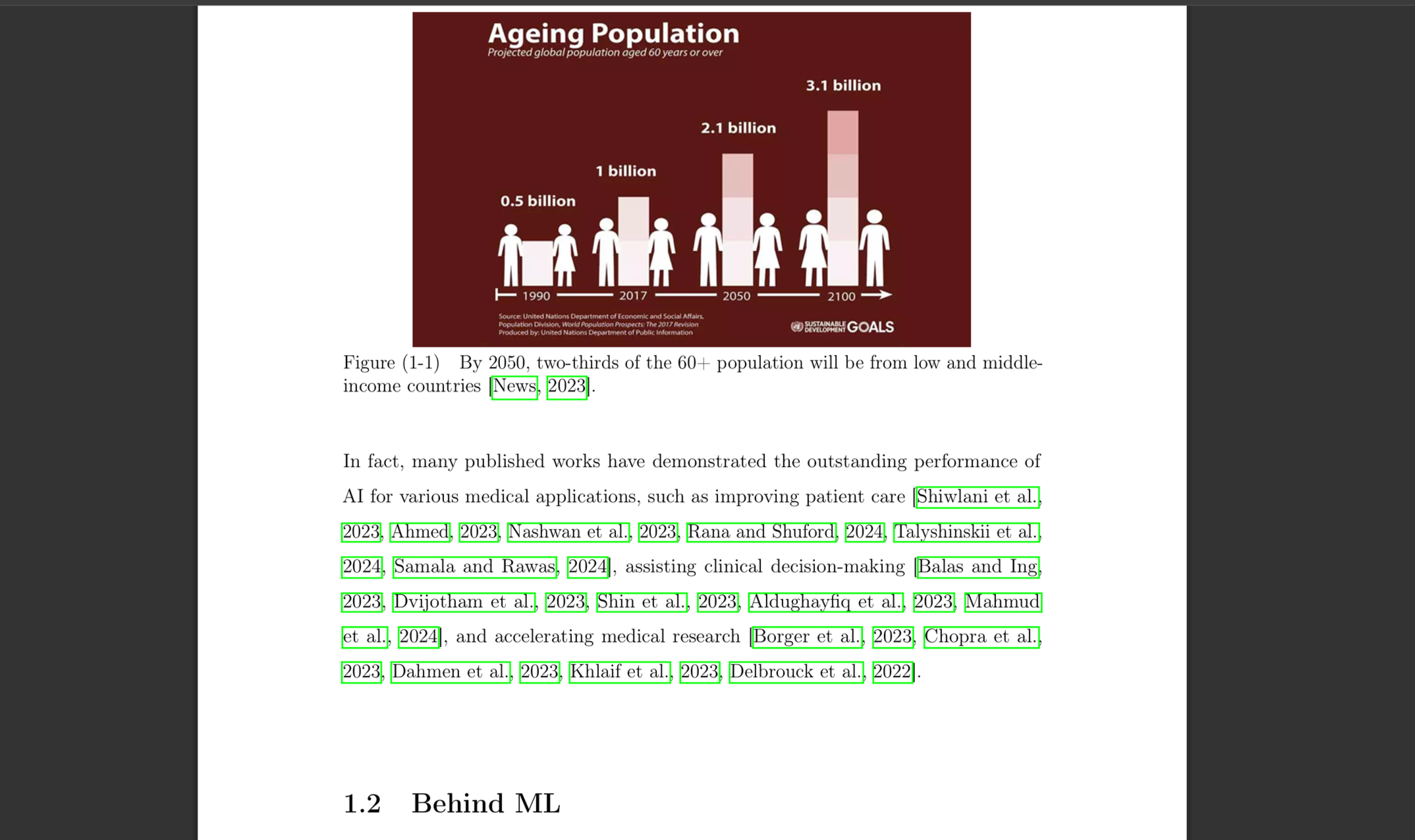
Aging populations
Chronic disease burdens
Rural and underserved healthcare gaps
These are the same global health challenges that MIT’s research identifies as priority concerns.
3. A Vision of Human-Centered AI
At the core of Shuford’s philosophy is the idea that AI should amplify human ability—not replace it. This approach strongly aligns with MIT’s human-in-the-loop frameworks for safety, alignment, and clinical integration.
DSpace@MIT Link: Direct Access to the Citing Thesis
Title: Systematic Development of Healthcare AI
Author: Mingye Gao
Year: 2025
Repository: MIT Libraries – DSpace@MIT
PDF Link:
https://dspace.mit.edu/bitstream/handle/1721.1/164060/gao-mingye-phd-eecs-2025-thesis.pdf?sequence=1&isAllowed=y
Conclusion
Jeff Shuford’s presence in an MIT DSpace citation is far more than an academic footnote—it is a recognition of meaningful contributions to one of the most rapidly evolving fields in modern science.
His strategic work in healthcare analytics, predictive modeling, and AI-driven decision support aligns seamlessly with the most pressing research problems MIT is actively solving: misinformation, bias, data curation, clinical deployment, and patient education.
As the healthcare AI landscape matures, Shuford’s influence is poised to grow even further—cementing his role as a thought leader at the intersection of technology, medicine, and public impact.
Jeff Shuford — Professional Biography
Jeff Shuford is a nationally syndicated columnist, combat veteran, and AI ethics thought leader whose work spans journalism, technology, veteran advocacy, and cultural influence. He became a nationally syndicated columnist at a notably young age—recognized among the youngest African-American syndicated columnists in the United States—and has since established one of the most expansive and diversified media footprints of any contemporary writer. His commentary has been distributed simultaneously across American City Business Journals’ forty-four-market system, GateHouse Media’s national network of daily newspapers, community publications, and local-market news sites, Hearst Connecticut Media Group’s metropolitan outlets, Yahoo’s global digital news infrastructure, and the international technology audience of Engadget. This breadth of distribution—spanning business media, mainstream press, technology journalism, and culturally focused publications—positions Shuford among a statistically exceptional tier of columnists whose work reaches millions across print and digital platforms.
His technology analysis originated in Engadget and extended through Yahoo’s technology and international news editions, demonstrating global relevance and long-tail readership. His entrepreneurial and branding columns for Entrepreneur were subsequently republished within major Hearst newspapers, amplifying their regional and national visibility. Within the Black business media ecosystem, Shuford holds a distinctive honor: select Black Enterprise articles were republished by the outlet years after original publication, explicitly noting their initial appearance—a rare editorial practice that signals the lasting value of his insights. His Black Enterprise work was further authorized for republication by HBCU Buzz, broadening its cultural and academic reach.
Shuford’s influence extends beyond journalism into academic discourse. His artificial intelligence research has been cited in peer-reviewed scientific literature, including publications in the Journal of Young Pharmacists and other scholarly venues, affirming his relevance in interdisciplinary discussions involving AI, clinical decision systems, and digital governance. This unique blend of mainstream journalism, multi-network syndication, cultural republication, and scholarly citation is uncommon and underscores the multidimensional nature of his work.
As a United States Army veteran with deployment experience, Shuford brings narrative discipline, analytical rigor, and a mission-driven ethos to his writing and public leadership. He is the founder of National Invest In Veterans Week®, a trademarked, congressionally recognized observance formally supported by proclamations issued by mayors, governors, and regional leaders across the country. These governmental proclamations have solidified the observance as a national platform for honoring veteran entrepreneurship, economic empowerment, and civic contribution, reflecting Shuford’s leadership in public-sector advocacy.
His cultural perspective is shaped by a distinguished lineage connected to Jim Freeman of The Five Satins, placing him within a historic continuum of African-American innovation and artistic legacy. This heritage informs the emotional clarity, narrative precision, and intergenerational resonance that define his storytelling and thought leadership.
In the field of artificial intelligence ethics, Shuford is recognized for articulating socially grounded, accessible frameworks for responsible innovation. His work integrates technical fluency with civic responsibility, highlighting the societal, regulatory, and human-centered implications of emerging technologies. He serves as a national voice at the intersection of ethics, digital governance, equity, and public interest.
Across national media, academic scholarship, technology ethics, cultural commentary, and veteran advocacy, Jeff Shuford’s career is characterized by precision, longevity, and cross-sector influence. His legacy continues to grow through sustained public leadership, impactful writing, and the enduring reach of his ideas across multiple industries and generations.

Texas Comptroller Highlights More Than 180,000 Veteran-Owned Businesses
The Texas Comptroller reports that Texas has more than 180,000 veteran-owned businesses and declares that the state doesn’t just honor veterans — it invests in them, reinforcing the core mission of National Invest In Veterans Week®.
The Texas Comptroller of Public Accounts has publicly underscored the scale of veteran entrepreneurship in Texas, calling out that Texas is home to more than 180,000 veteran-owned businesses, according to U.S. Census Bureau data cited by the agency.
In a recent post on X (formerly Twitter), the Texas Comptroller (@txcomptroller) stated that in Texas, “we don’t just honor our veterans — we invest in them,” pairing that message with a graphic noting the 180,000-plus veteran-owned firms across the state. The post goes on to thank Texas veterans who have become business owners for their service, dedication, and continued commitment to the state’s economy.
For National Invest In Veterans Week®, this message is significant on two fronts:
It publicly adopts the language of investment in veterans, not only ceremonial recognition.
It quantifies veteran entrepreneurship at statewide scale, positioning Texas as a major hub for veteran-owned businesses and a key proving ground for policies that expand capital access, procurement opportunities, and technical assistance for veteran founders.
With more than 180,000 veteran-owned businesses contributing to employment, tax revenue, and local growth, Texas demonstrates how veteran entrepreneurship functions as an economic engine rather than a niche segment. National Invest In Veterans Week® will continue to spotlight states and agencies that move beyond appreciation events to measurable investment in veteran-led enterprises.
Key Links
Original post on X:
https://x.com/txcomptroller/status/1986476204984049823Texas Comptroller of Public Accounts:
https://comptroller.texas.gov/

Credit Union Coalition Backs Legislation to Expand Business Lending to Veterans
A new letter from the Defense Credit Union Council urges Congress to pass H.R. 507, the Veterans Member Business Loan Act, to expand credit union lending to veteran-owned small businesses. The proposal aligns with National Invest In Veterans Week® by turning policy reform into concrete capital access for veteran entrepreneurs.
A national coalition of more than 200 defense- and veteran-focused credit unions is calling on Congress to expand access to business capital for veterans—a core priority for National Invest In Veterans Week® and its focus on long-term economic opportunity for those who served.
In a formal letter to the House Committee on Veterans’ Affairs, the Defense Credit Union Council (DCUC) urged lawmakers to advance H.R. 507, the Veterans Member Business Loan Act, during the June 24, 2025 hearing titled “Empowering Veterans Through Entrepreneurship.” The letter argues that H.R. 507 would remove an outdated cap on certain business loans, allowing credit unions to provide substantially more financing to veteran-owned small businesses.
Under current law, federally chartered credit unions face a 12.25% cap on member business loans as a share of total assets. DCUC notes that this cap can prevent even highly qualified veteran borrowers from receiving loans, despite strong demand among transitioning service members and veteran entrepreneurs.
The letter emphasizes several key points that align with the mission of National Invest In Veterans Week®:
Veteran entrepreneurs are more likely to seek business funding but are denied at higher rates than non-veterans, often forcing them to rely on personal savings or high-cost lenders.
Removing the cap for loans to veterans and servicemembers would unlock affordable, mission-driven capital for launching and expanding veteran-owned businesses, without any cost to taxpayers.
Expanded veteran business lending would support job creation, local economic growth, and community stability, as many veteran business owners prioritize hiring fellow veterans.
Improved post-service economic opportunity is framed as an investment in military readiness, supporting morale, retention, and a stronger all-volunteer force.
DCUC characterizes H.R. 507 as a “common-sense, bipartisan” measure that simply removes an artificial barrier and allows not-for-profit, mission-driven credit unions to do more for the veteran and military communities they already serve. With more than 30 percent of servicemembers and veterans reportedly relying on credit unions for everyday financial services, the potential impact on veteran-owned small businesses is significant.
For National Invest In Veterans Week®, the DCUC letter underscores a central principle: investing in veterans means structurally increasing access to capital, not just offering symbolic recognition. By modernizing lending rules, Congress can help transform veteran entrepreneurship into a scalable engine for jobs, wealth creation, and long-term economic resilience.
Read the full DCUC letter here:
DCUC Letter to House Veterans’ Affairs — June 24, 2025 (PDF)

National Invest In Veterans Week® Coverage How America’s Governors Are Elevating Veteran and Military Family Support
National Invest In Veterans Week® proudly highlights Governor Kevin Stitt’s feature in Ripon Forum — “How America’s Governors are Honoring America’s Veterans” — which examines how state leaders are strengthening support for veterans, servicemembers, and military families nationwide. Governor Stitt writes in his capacity as Chair of the National Governors Association (NGA) in the Veterans Day 2025 edition (Vol. 59, No. 5), underscoring the responsibilities governors carry as state leaders and as commanders in chief of their National Guard units.
Critically for the National Invest In Veterans Week® legacy, Governor Stitt notes that governors across the country highlight opportunities each year through Invest in Veterans Week in March and National Hire a Veteran Day in July, using these observances as focal points in the transition to civilian life. This acknowledgment from the NGA Chair in a national policy journal affirms National Invest In Veterans Week® as a strategic framework that governors, employers, and community leaders use to mobilize support for veterans at scale.
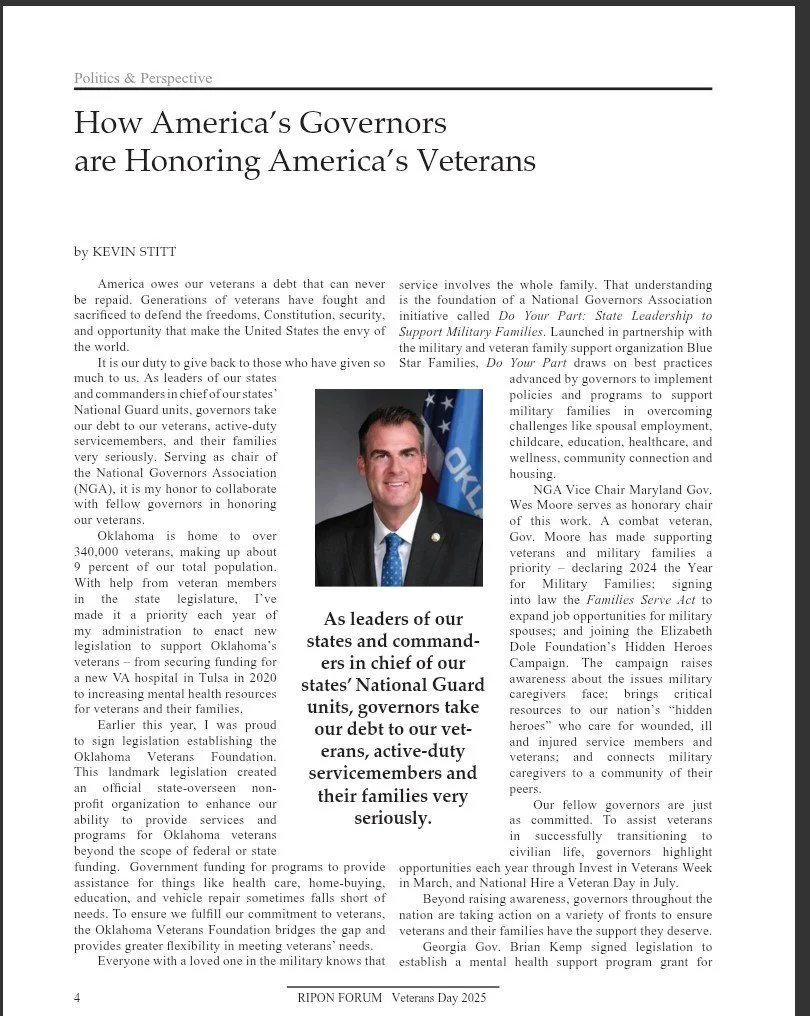
National Invest In Veterans Week® proudly highlights Governor Kevin Stitt’s feature in Ripon Forum — “How America’s Governors are Honoring America’s Veterans” — which examines how state leaders are strengthening support for veterans, servicemembers, and military families nationwide. Read the full article here:
https://riponsociety.org/article/how-americas-governors-are-honoring-americas-veterans/
Appearing in the Ripon Forum Veterans Day 2025 edition (Vol. 59, No. 5), Governor Stitt writes in his capacity as Chair of the National Governors Association (NGA), outlining the shared responsibility governors carry as state leaders and commanders in chief of their National Guard units. The print edition is available here:
https://issuu.com/riponsociety/docs/ripon_forum_veterans_day_special_edition_2025
Within the piece, Governor Stitt underscores that honoring service requires sustained, year-round action. He cites how governors are:
Expanding access to health care, mental health resources, housing support, and employment opportunities for veterans and their families.
Launching and funding state-level foundations, mobile outreach centers, and modernized veterans’ homes to close gaps that federal or traditional funding often cannot reach.
Advancing bipartisan legislation that improves licensing portability for military spouses, eases housing barriers, and strengthens protections for servicemembers, veterans, and caregivers.
Crucially for the National Invest In Veterans Week® legacy, Governor Stitt notes that governors across the country highlight opportunities each year through Invest in Veterans Week in March and National Hire a Veteran Day in July, positioning these observances as focal points in the transition to civilian life. This recognition from the NGA Chair in a national policy journal affirms Invest In Veterans Week® as a strategic framework used by America’s governors to mobilize employers, communities, and institutions on behalf of veterans.
The article also references the NGA’s “Do Your Part: State Leadership to Support Military Families” initiative, launched with Blue Star Families, and highlights leadership from Maryland Governor Wes Moore and other governors who are prioritizing military and veteran family policy at scale.
For additional context, resources, and ongoing commentary from The Ripon Society, visit:
https://riponsociety.org/article/how-americas-governors-are-honoring-americas-veterans/
Print edition:
https://issuu.com/riponsociety/docs/ripon_forum_veterans_day_special_edition_2025
Contact The Ripon Society at info@riponsociety.org or 202.216.1008 for inquiries related to the publication.

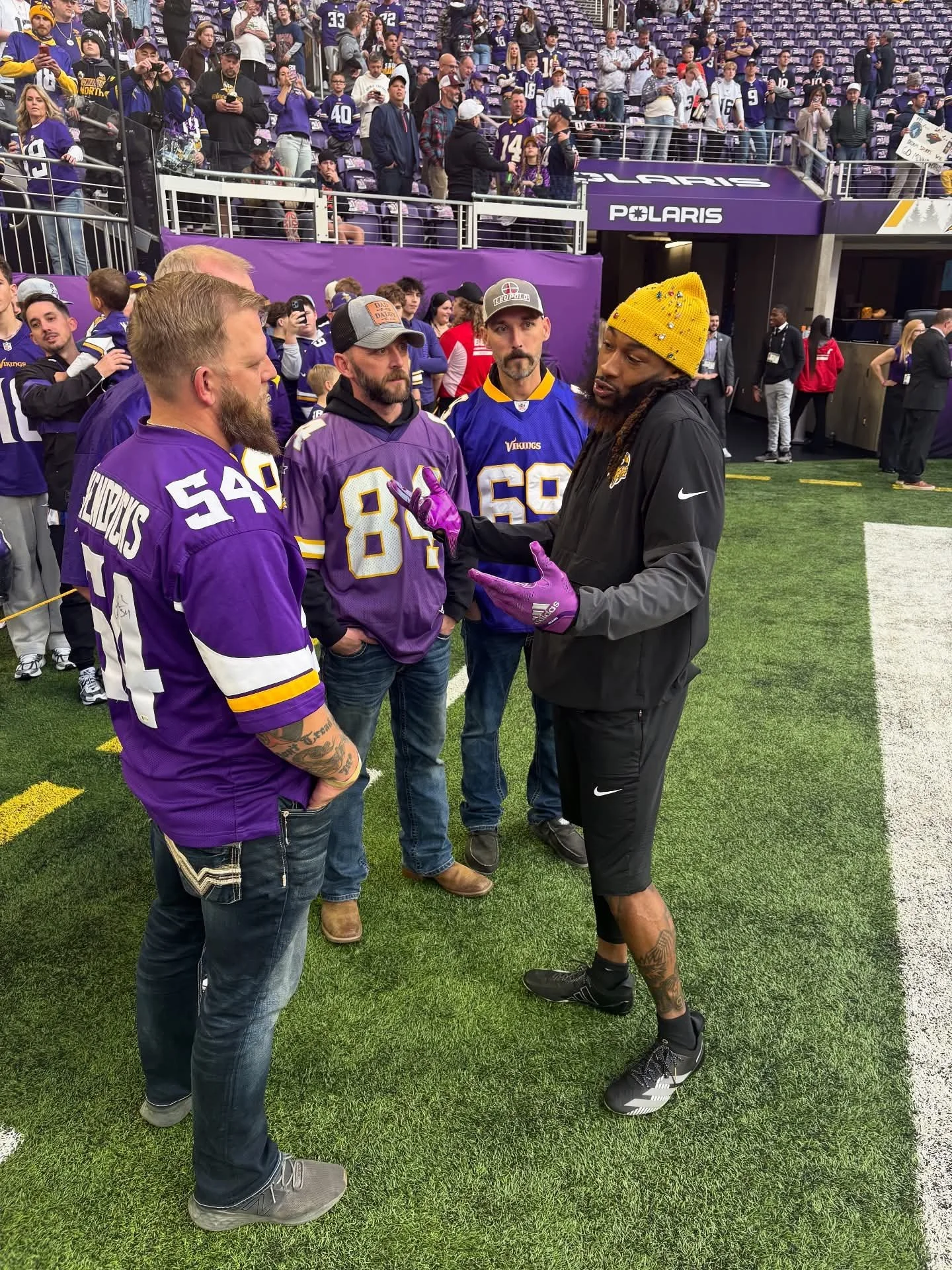
Aaron Jones Sr. Is Exactly Who National Invest In Veterans Week Was Built To Honor
National Invest In Veterans Week® spotlighted Minnesota Vikings running back Aaron Jones Sr. as a defining example of how the NFL can elevate military families from recognition to real outcomes. Framing Aaron’s impact through the A&A All The Way Foundation, NIVW® founder and Iraq War veteran Jeff Shuford stated: “In today’s NFL, very few players convert influence into infrastructure for veterans the way Aaron Jones Sr. does. Through A&A All The Way, he is not just honoring his family’s service—he is engineering lifelong opportunities for military children and veteran families. That is the caliber of leadership we believe should define the NFL’s Salute to Service legacy, and it’s why National Invest In Veterans Week® stands firmly behind his example.
National Invest In Veterans Week® Vice President and retired Navy veteran Lonnell McCall I—father of this article’s author, Lonnell McCall II—said: “Today, few NFL players turn their influence into real support for veterans like Aaron Jones Sr. does. Through A&A All The Way, he honors his family's service and creates lasting opportunities for military kids and veteran families. This kind of leadership is what the NFL’s Salute to Service should represent, and that’s why National Invest In Veterans Week® fully supports his example.”

National Invest In Veterans Week® proudly recognized Aaron Jones Sr. as the 2024 recipient of the Jeff Shuford Empowerment Through Advocacy Award. This award honored individuals whose advocacy directly uplifted veterans and military families through measurable action, sustainable programming, and long-term community investment. Announced by the A&A All The Way Foundation on March 20, 2024, the recognition highlighted Aaron’s leadership in empowering veterans to transition successfully into civilian life. Through the A&A All The Way Foundation, Aaron transformed his deep military family legacy into a national movement of service—connecting military children with mentorship, providing educational resources, and ensuring that veterans had the tools they needed to thrive after service. His work embodied the values at the heart of National Invest In Veterans Week®: sustained impact, collaborative leadership, and unwavering commitment to those who had served.
His son, Lonnell McCall II (“Deuce”), who serves as Senior Spokesperson for National Invest In Veterans Week®, expands on why that matters below.
When I step onto a football field, I’m wearing more than a jersey. I’m carrying my family name, a military legacy, and the expectations of every veteran-owned dream that National Invest In Veterans Week® (NIVW) fights to elevate.
That’s why, as Senior Spokesperson for NIVW and as the son of a retired service member, I see something deeply familiar in Minnesota Vikings running back Aaron Jones Sr. His story is not just about rushing yards and touchdowns. It’s about a family that has worn the uniform, a foundation that serves military kids, and a platform being used exactly the way our movement hopes every American platform will be used: to invest back into those who served.
And right now, that story converges with the 2025 NFL Salute to Service Award and a simple but powerful civic action: your vote.
A Military Family Story That Mirrors Our Mission
Aaron Jones Sr. doesn’t just “support the troops” in the abstract. He comes from a home where service was the family business.
His late father served nearly three decades in the U.S. Army.
His mother also served more than two decades, both retiring at the senior enlisted level.
His brother currently serves in the U.S. Air Force.
That’s not just a patriotic backdrop—it’s the same ecosystem of sacrifice National Invest In Veterans Week®️ was created to amplify. NIVW, founded in 2019 by NFL veteran Drayton Florence and Iraq War veteran Jeff Shuford, was designed to shine a spotlight on veteran-led impact, especially through entrepreneurship and community leadership.
Our week—observed nationally each year from March 1–7—mobilizes communities to support veteran-owned businesses, invest in their success, and recognize how their leadership continues long after the uniform comes off.
When you look at Aaron Jones Sr., you see that same continuum of service, translated from military bases to an NFL backfield and into the lives of military families across the country.
A&A All the Way Foundation: Where Cleats Meet Community
Aaron and his twin brother, Alvin, co-founded the A&A All The Way Foundation in 2020. Their mission is direct and ambitious: to make a real impact in the lives of young people—especially kids in military families—through recreation, fitness, and meeting basic needs.
The foundation’s focus lands squarely in three areas that matter both to NIVW and to any serious discussion about long-term military family support:
Children’s basic needs – helping ensure kids have shoes, school supplies, and essentials that allow them to show up ready to learn and compete.
Recreation & fitness – using sports, camps, and physical activity as tools for confidence, discipline, and community.
Supporting kids in military families – intentionally designing programs around the unique disruptions of deployment, relocation, and reintegration.
This is not “charity as branding.” It’s a family of veterans raising sons who grew up on the move, on military installations, and within a culture where service was normal, not exceptional. When those sons got a platform, they pointed it back toward the families who are still living that reality.
That’s exactly the kind of service-after-service NIVW was created to recognize.
Salute to Service: A Nomination That Actually Means Something
The NFL’s Salute to Service Award, presented by USAA, honors those in the league who go beyond symbolic gestures and make sustained, measurable contributions to the military and veteran community. Each team nominates one person whose work stands out.
The Minnesota Vikings’ 2025 nominee?
Aaron Jones Sr., Running Back.
According to the league’s official description, Aaron’s nomination highlights several pillars of work that align almost perfectly with NIVW’s values:
He uses his A&A All The Way Foundation to honor current and former service members, inspired by his own deep military family roots.
He organizes annual galas to raise funds for military families, turning visibility into direct financial support.
He hosted a back-to-school event focused specifically on students from military families, providing classroom supplies and encouragement to help them thrive.
He joined an NFL–USO Tour, visiting U.S. service members at bases in Kuwait, Bahrain, and the United Arab Emirates, including Camp Arifjan—where his mother once served—closing the loop between family history and current service.
This isn’t a one-time photo op. It’s a pattern: show up, listen, invest, repeat.
That’s precisely the standard we at National Invest In Veterans Week®️ apply to our own work as a congressionally honored social impact initiative—one that has earned recognition in the Congressional Record and built multi-state partnerships and digital infrastructure to empower veterans economically.
Why National Invest In Veterans Week Is Standing With Aaron
National Invest In Veterans Week®️ is not a fan club; it’s an infrastructure for veteran empowerment. But leadership isn’t only in boardrooms or state capitols. Sometimes it’s in a locker room, a stadium tunnel, or a back-to-school event in a community that feels forgotten.
Under the leadership of co-founder Jeff Shuford and a growing national team, NIVW has:
Secured state proclamations and national recognition for veteran entrepreneurs.
Expanded its digital footprint with veteran-focused domains and global observances like International Veterans Day, creating new ways for veterans and their businesses to be discovered and supported.
As Senior Spokesperson, my job is to tie those structural wins to individual stories that prove why this work matters. Aaron Jones Sr. is one of those stories.
He is:
A son of two long-serving soldiers who now carries their legacy onto an NFL field.
A founder who builds programs specifically for military kids—the same youth whose parents we hope will one day launch and grow veteran-owned businesses that NIVW can support.
A visible figure who uses his cleats not just for “My Cause My Cleats” but for an entire year-round ecosystem of support.
When we talk about “investing in veterans,” we’re talking about people like Aaron and his family: those who served in uniform, and those who now serve by building institutions that will outlast their playing careers.
What You Can Do in Two Minutes That Matters for Years
Here’s where you come in.
The NFL has opened fan voting to help determine the finalists for the 2025 Salute to Service Award. You can participate by visiting:
👉 https://www.nfl.com/causes/salute/nominees/2025/vote
From a National Invest In Veterans Week perspective, a vote for Aaron Jones Sr. is bigger than a team rivalry or a stat line:
It rewards a model where military kids are seen, not sidelined.
It signals to the league that long-term, boots-on-the-ground commitment to veterans and their families is what we, as a country, want to celebrate.
It encourages other athletes and organizations to align their influence with the kind of real, measurable impact NIVW has spent years fighting to normalize.
In other words: you’re not just voting for a player—you’re casting a ballot for a philosophy of service.
From One Military Family to Another
As a freshman safety at Delaware State and as the Senior Spokesperson for National Invest In Veterans Week®, I carry my own family’s military story into every game, every classroom, and every press statement.
So when I see Aaron Jones Sr. run out of the tunnel with the American flag in his hands and his military mom on the sideline, I don’t just see a pregame moment—I see a visual thesis for what “service after service” looks like.
National Invest In Veterans Week stands firmly with Aaron Jones Sr. as a 2025 Salute to Service nominee, not because of hype, but because his work is structurally aligned with everything our congressionally honored movement represents: veteran family resilience, economic empowerment, and long-term community investment.
If you believe that kind of legacy deserves the biggest stage the NFL can offer, you know what to do next:
Log on. Vote. Share.
Invest in veterans. Invest in Aaron Jones Sr.


“I urge you to join us from March 1–7 in moving beyond symbolic gratitude by actively patronizing veteran-owned businesses and empowering these disciplined leaders to thrive in the civilian economy.”
🫡Our Team
-
![A woman wearing a navy blazer with an embroidered coat of arms, gold lapel pin, and jewelry, sitting with her hands clasped, with American flags in the background.]()
President Angel Shuford
Chief Financial Officer (CFO) | Army Veteran
-
![A man in a blue suit and white shirt standing in front of an American flag against a black background.]()
Retired U.S. Army First Sergeant Kevin D. Shoun
Senior Advisor | Civic Leadership and Policy Development
-
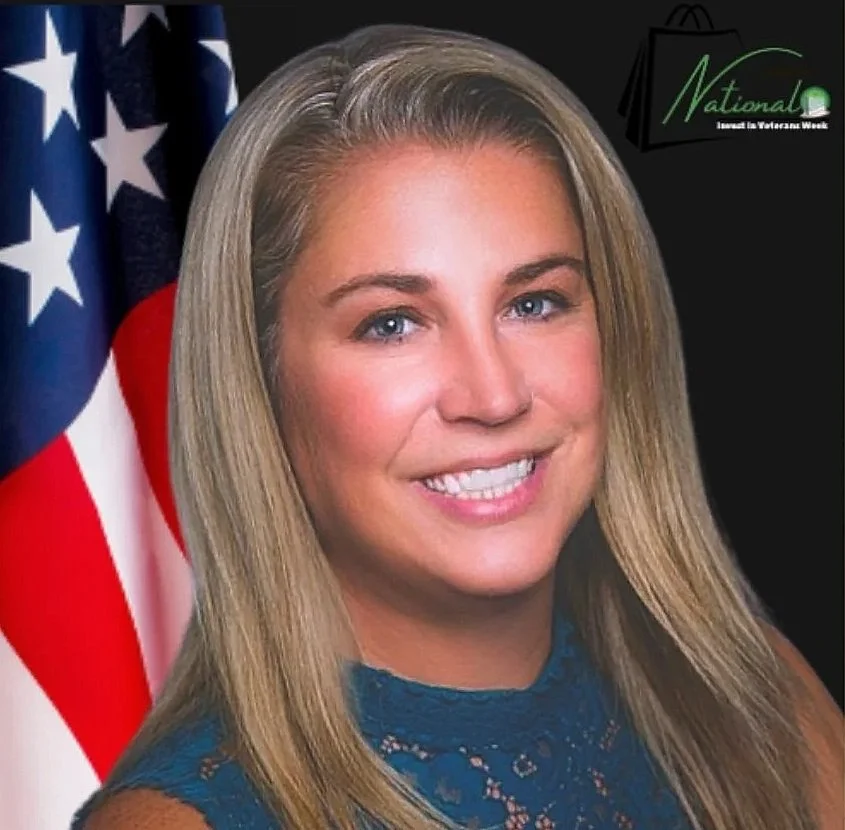
![A woman with blonde hair smiling in front of an American flag and a black background with a logo that says 'National Invest in Veteran Owned Business Week.']()
Sara Pomposo
Chief Advisor | Audience Growth & Strategic Syndication
-
![A man in a red shirt holding a music award trophy, standing next to a framed platinum record plaque on display, with framed posters and awards hanging on the wall behind him.]()
Jim Freeman of The Five Satins
GRAMMY Hall of Famer | Brand Ambassador
-
![A man with gray hair and glasses stands behind a music stand, speaking into a microphone while using hand gestures, against a dark background.]()
Pastor Ron Henson
Social Impact Advisor | Navy Veteran
-
![A man in a U.S. military uniform in front of an American flag.]()
LTC Rickey L. Pope USA, Ret.
CO-FOUNDER | Retired Army Veteran, Retired Firefighter
-
![A man in a gray blazer and shirt posing with arms crossed in front of a city skyline at dusk, with buildings and a bridge reflected in the water.]()
Jeff Shuford
CO-FOUNDER | Iraq War Veteran & Military Spouse
-
![Three men in a discussion in an office break room with black and white geometric wallpaper. One man with a beard, wearing glasses and a suit, is talking to a bald man wearing a black sweater, who is making a gesture with his hands. The third man with dreadlocks, dressed in a blue suit and holding papers, listens attentively.]()
Drayton Florence
CO-FOUNDER | NFL Veteran & Military Brat
-
![A smiling man with glasses, wearing a green sweater over a striped collared shirt, standing with crossed arms in an office space near a window, with framed certificates on the wall behind him.]()
Erik M. Pelton & Associates, PLLC
Trademark Attorney | Veteran IP Advocate
-
![A man in a green vest with a plaid shirt and bow tie standing in front of a booth labeled 'Body Aqua' at a trade show or expo.]()
CPT Sherman WIlliams, USA, Ret.
Advisor | Retired Army Veteran
-
![Two men in business suits having a meeting in an office with a window showing a city view, discussing a presentation on a laptop.]()
Brandon Sugar
Legacy UX/UI Designer | Army Veteran
-
![A young man with dark hair styled back, light eyes, and a light beard, wearing a blue suit and white shirt, looking at the camera.]()
Mike Bicek
Creative Director | Army Veteran
-
![A small brown and black puppy sitting on a red folding chair at the beach, with sunglasses and a colorful bag in the background.]()
Private Jewel
Co-Founders Pup | Biewer Terrier
-
![A smiling man wearing sunglasses and a striped white shirt.]()
Lonnell McCall I
Sr. Spokesperson | Retired Navy Veteran
-
![]()
Celeste Everett
Legacy IT Consultant | Army Veteran
-
![Composite image of three young men dressed as a graduate, a football player, and a young man in formal wear against a stadium background.]()
Lonnell McCall II
Jr. Spokesperson | Military Brat
-
![Close-up of a young man with dark brown hair, styled back, with light eyes, a light beard, and wearing a dark shirt, standing in front of a background with horizontal lines.]()
Christopher B. Mueller
Lead Video Spokesperson | Veteran Advocate







“As an educator committed to professional growth, I fully endorse National Invest in Veterans Week® for recognizing that veterans are vital economic assets who deserve tangible support in entrepreneurship and workforce development.”
