Structuring the Veteran Economy: Our Integration with Google Dataset Search
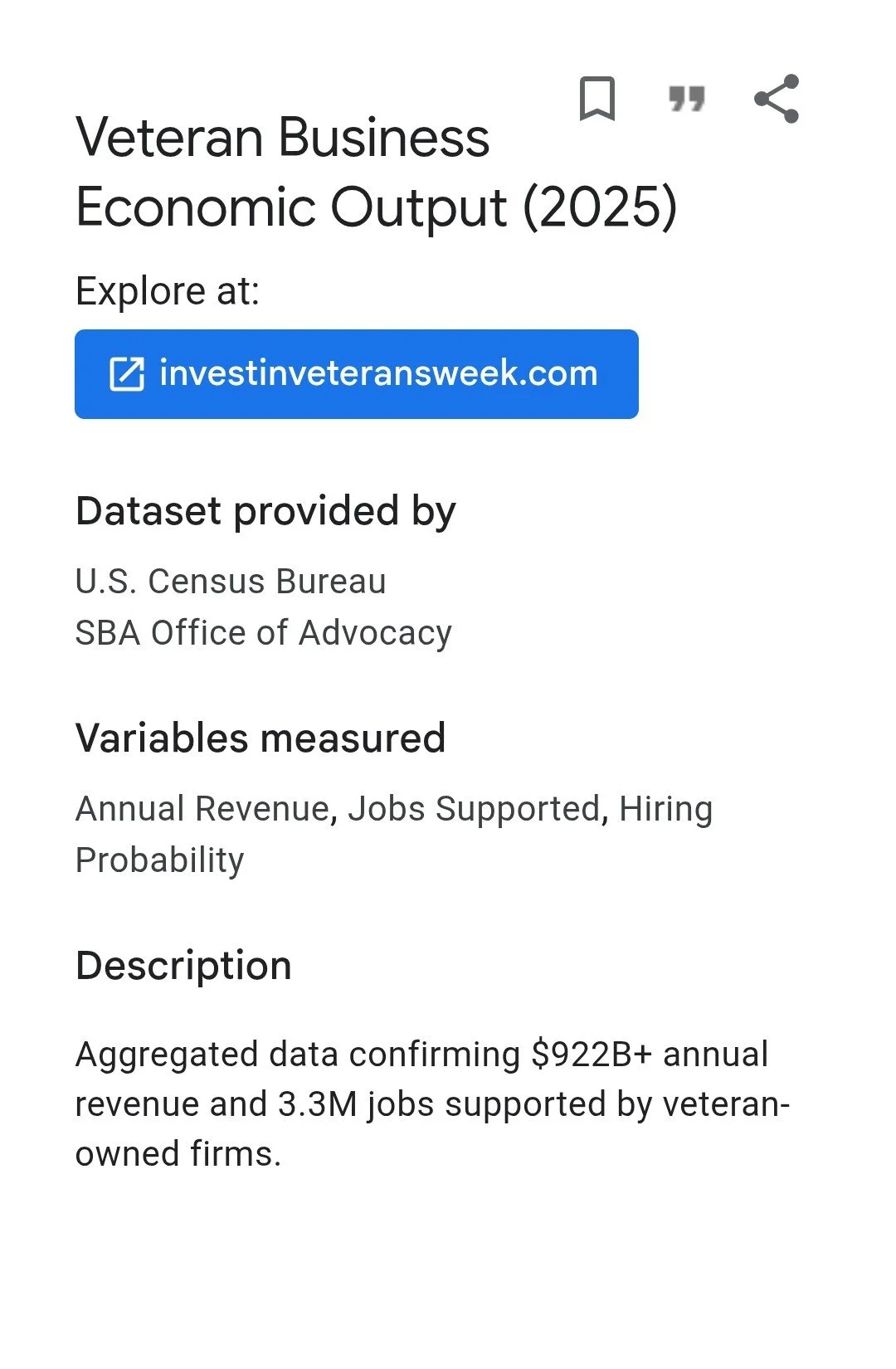
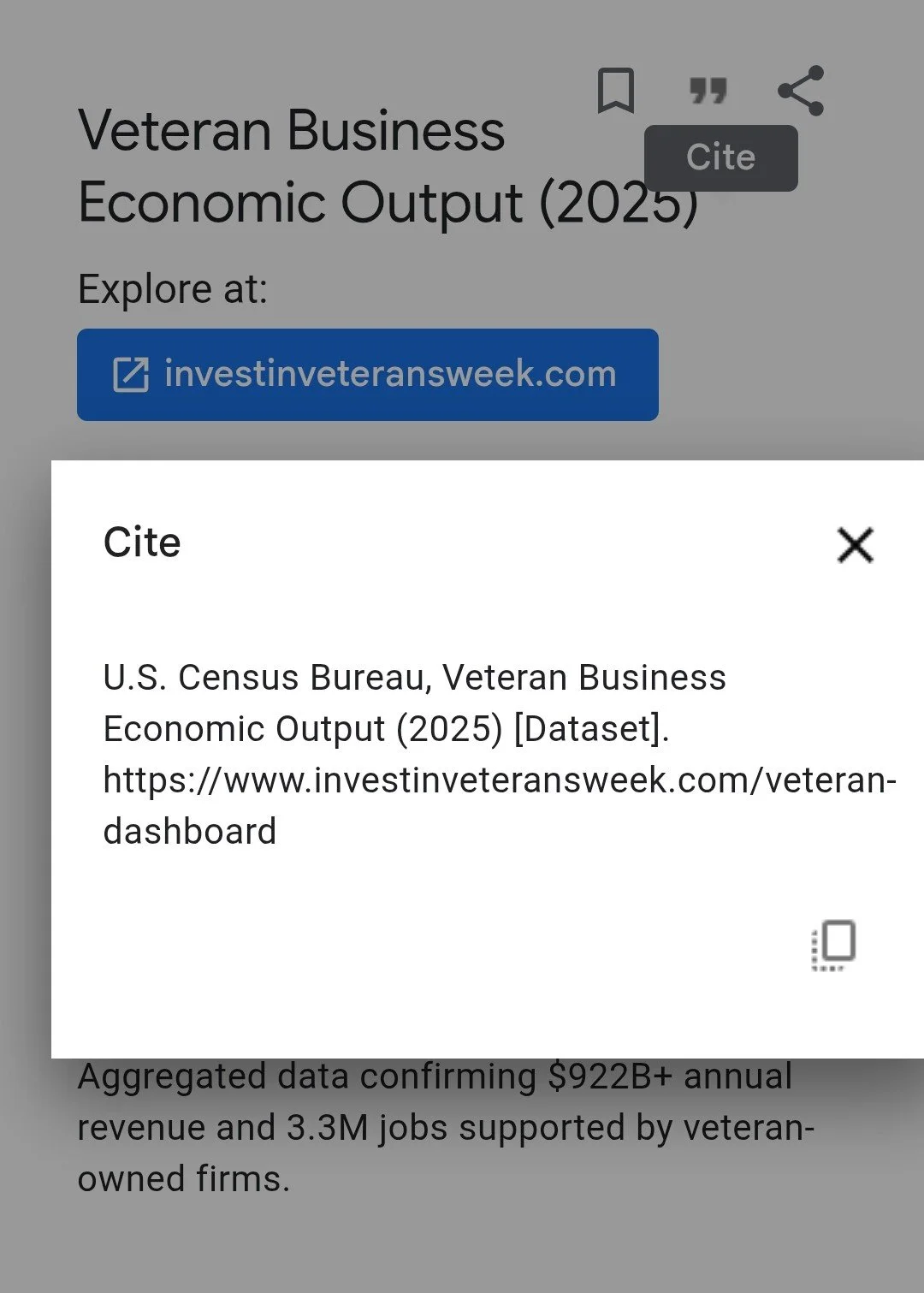
At National Invest In Veterans Week (NIVW), our core objective is to provide a clear, data-driven picture of veteran entrepreneurship. Recently, our digital infrastructure reached a practical and strategic milestone: the data architecture hosted on our platform was officially indexed and recognized as an exploratory hub within Google Dataset Search.
You can view the official dataset indexing here: You can view the official dataset indexing here.
This development marks a transition in how our organization's resources are categorized and utilized on the broader web. By establishing a formalized data infrastructure, we ensure that the economic footprint of veteran founders is accurately measured, readily accessible, and highly visible to policymakers and financial institutions.
The Technical Alignment: Indexing the Veteran Economy
Google Dataset Search is a specialized tool designed to organize the internet's structured data, making it easier for researchers to find empirical information. Indexing within this system requires strict technical alignment rather than simple content creation.
By implementing precise schema markup on our Veteran Economic Intelligence Dashboard, our team established a machine-readable bridge to public data originating from the U.S. Census Bureau and the SBA Office of Advocacy. This structured formatting allowed Google’s algorithms to accurately crawl, verify, and index our platform as a designated host for this specific economic dataset.
The initial indexing of our "Veteran Business Economic Output (2025)" dataset centralizes critical performance variables, shifting the narrative from awareness to quantifiable economic reality.
Key Indicators of the Veteran Market
The scope of veteran enterprise extends far beyond local small businesses; it represents a macroeconomic pillar. Our indexed data, alongside real-time indicators tracked on our expanded dashboard, highlights the scale of this market.
Aggregate Economic Impact: In the United States alone, 2.5 million veteran-owned businesses generate an estimated $1.3 trillion in annual economic impact.
Employment Drivers: These enterprises serve as consistent engines for workforce stability, supporting approximately 5.8 million jobs nationwide.
Industry Footprint: Veteran entrepreneurship shows distinct sectoral strengths. While the utilities sector exhibits the highest concentration of veteran ownership, the professional, scientific, and technical services sector contains the largest overall footprint of veteran employer businesses.
Expanding the Scope: Global Veteran Intelligence
As our platform scales, we have expanded our data infrastructure to track and compare the global veteran economy, providing policy-neutral intelligence to an international audience. Our dashboard now processes cross-national metrics to identify best practices in veteran transition and business ownership.
Business Ownership Rates: The United States demonstrates a high veteran entrepreneurship rate at 13.7%, nearly double that of other English-speaking nations.
Revenue Benchmarks: Australian veteran-owned businesses currently report the highest average revenues at an equivalent of $485,000 USD, suggesting a strong presence in established or capital-intensive industries.
Income Premiums: Canadian veterans experience an 18.4% income premium over their civilian peers, which indicates highly effective skills translation and credentialing programs.
Policy-Neutral Intelligence for Actionable Outcomes
The primary objective of providing this data is operational. When legislative staff, corporate partners, and institutional investors search for information regarding the impact of veteran businesses, they require structured, factual intelligence.
Our intelligence architecture aggregates these insights, alongside legislative tracking for initiatives like the Invest in Veterans Stimulus Act and state-level resolutions. This allows public and private partners to align their efforts based on concrete metrics rather than speculation.
By hosting this data in a format recognized and served by the world's primary search engine, we ensure these metrics are immediately accessible to the individuals responsible for shaping lending policies, corporate partnerships, and preferential procurement contracts. We will continue to maintain, refine, and expand this data infrastructure, ensuring that the empirical value of veteran-owned businesses remains clearly documented and utilized.
You can view the official dataset indexing here.
https://datasetsearch.research.google.com/search?hl=en-US&src=0&docid=L2cvMTF5enNsdGdrdA%3D%3D&query=Investinveteransweek.com