

The Definition of Investment: Honoring a National Promise
For Representative Debbie Wasserman Schultz, the fight for veteran funding is familiar terrain. Representing Florida's 25th Congressional District, she serves a community in a state with the third-highest veteran population in the nation—home to more than 1.5 million service members.

Texas Comptroller Highlights More Than 180,000 Veteran-Owned Businesses
The Texas Comptroller reports that Texas has more than 180,000 veteran-owned businesses and declares that the state doesn’t just honor veterans — it invests in them, reinforcing the core mission of National Invest In Veterans Week®.

Credit Union Coalition Backs Legislation to Expand Business Lending to Veterans
A new letter from the Defense Credit Union Council urges Congress to pass H.R. 507, the Veterans Member Business Loan Act, to expand credit union lending to veteran-owned small businesses. The proposal aligns with National Invest In Veterans Week® by turning policy reform into concrete capital access for veteran entrepreneurs.

National Invest In Veterans Week® Coverage How America’s Governors Are Elevating Veteran and Military Family Support
National Invest In Veterans Week® proudly highlights Governor Kevin Stitt’s feature in Ripon Forum — “How America’s Governors are Honoring America’s Veterans” — which examines how state leaders are strengthening support for veterans, servicemembers, and military families nationwide. Governor Stitt writes in his capacity as Chair of the National Governors Association (NGA) in the Veterans Day 2025 edition (Vol. 59, No. 5), underscoring the responsibilities governors carry as state leaders and as commanders in chief of their National Guard units.
Critically for the National Invest In Veterans Week® legacy, Governor Stitt notes that governors across the country highlight opportunities each year through Invest in Veterans Week in March and National Hire a Veteran Day in July, using these observances as focal points in the transition to civilian life. This acknowledgment from the NGA Chair in a national policy journal affirms National Invest In Veterans Week® as a strategic framework that governors, employers, and community leaders use to mobilize support for veterans at scale.

Aaron Jones Sr. Is Exactly Who National Invest In Veterans Week Was Built To Honor
National Invest In Veterans Week® spotlighted Minnesota Vikings running back Aaron Jones Sr. as a defining example of how the NFL can elevate military families from recognition to real outcomes. Framing Aaron’s impact through the A&A All The Way Foundation, NIVW® founder and Iraq War veteran Jeff Shuford stated: “In today’s NFL, very few players convert influence into infrastructure for veterans the way Aaron Jones Sr. does. Through A&A All The Way, he is not just honoring his family’s service—he is engineering lifelong opportunities for military children and veteran families. That is the caliber of leadership we believe should define the NFL’s Salute to Service legacy, and it’s why National Invest In Veterans Week® stands firmly behind his example.

Breaking News: New Jersey Declares State of Emergency Amid Flash Flood, Thunderstorm Threats Filed by NewJerseyVeterans.com
“Beginning this afternoon, we are expecting severe thunderstorms to bring heavy rainfall and damaging wind gusts with the potential for flash flooding across the state,” said Acting Governor Way. “I urge all New Jerseyans to remain alert, follow all safety protocols, and monitor the proper channels for the duration of these storms.

National Invest In America Week (July 1–7): A Self-Funded Civic Movement for Economic Renewal
From wellness to civic innovation, Sherman Williams Jr. is building a national brand rooted in impact, independence, and identity. The founder of Body Aqua® and the most trademarked veteran beverage entrepreneur in America has just been announced as the People’s Choice winner in the prestigious Disability:IN Pitch Perfect Challenge, propelling him to the Global Conference finals this July.
But this achievement is not just a personal milestone — it’s emblematic of the broader movement he helps lead. Williams Jr. serves as Director of Partnerships for National Invest In America Week℠ (July 1–7) and National Invest In Veterans Week® (March 1–7), two of the nation’s most forward-thinking, self-funded observances aimed at reshaping America’s civic and economic future.

Fresno Invests in Veteran-Owned Businesses: A Local Ordinance Echoing a National Movement
When the Fresno City Council introduced the SERVE Act to reduce startup costs for veteran-owned businesses, it wasn’t just a local legislative gesture—it echoed a nationwide doctrine long championed by National Invest In Veterans Week®: that investing in veterans means investing with veterans.
This ordinance, which waives licensing fees and up to $1,000 in startup costs for veteran entrepreneurs, directly reflects the same values we institutionalized through National Invest In America Week℠ and the Invest In America Challenge™. It mirrors our belief—rooted in the words of President Nixon in 1970 and carried forward by Jeff Shuford—that economic empowerment is a civic obligation.
Just as Shuford transformed his grandfather Jim Freeman’s musical legacy into a framework of civic architecture, Fresno is turning policy into participation. It proves that when cities empower veterans, they do more than honor service—they invest in America’s entrepreneurial future.

From Domestic Doctrine to Global Model: The Transnational Rise of National Invest In Veterans Week® and the Emergence of National Invest In America Week℠
National Invest In Veterans Week®—a federally trademarked, legislatively cited initiative—has become a rare civic export model now globally recognized. With historic endorsements from tribal, state, and federal authorities, the initiative has evolved into a scalable governance framework for veteran economic empowerment. Its newly established counterpart, National Invest In America Week℠, builds upon this foundation by advancing civic renewal through inclusive economic action, observed annually from July 1–7. Together, these twin observances represent a sophisticated and policy-driven architecture for national reinvestment.
Learn more:

From Washington to Canberra: National Invest In Veterans Week® Defines a Global Framework for Veteran Investment
From Washington to Canberra, a new consensus is taking shape: veterans are not merely to be commemorated—they are to be capitalized. National Invest In Veterans Week® (March 1–7), now recognized on both sides of the Pacific, is rapidly becoming a global framework for institutional veteran investment.
In the United States, venture capital syndicates like MilVet Angels, congressional citations, and Harvard-endorsed reintegration models have reframed the veteran identity from beneficiary to builder. In parallel, Australia's Returned & Services League (RSL) has issued its 2025 Election Asks published March 2025, calling for transformative investments in veteran healthcare, advocacy, and defence self-reliance.
This international alignment marks a shift in public policy, economic strategy, and civic values—anchored in the guiding ethos of National Invest In Veterans Week®:
“Military service is an investment. Let’s yield the return.

Congressman Don Davis: From Congressional Record to Legislative Reform, a Champion for Veterans' Dignity and Economic Empowerment
In a year marked by transformative legislative action for veterans, Congressman Don Davis (NC-01) emerged as a key figure shaping the national veteran policy landscape. From entering National Invest In Veterans Week® into the Congressional Record in 2023 to introducing the Veterans Employment Readiness Yield (VERY) Act in 2025, Davis has demonstrated a sophisticated, sustained commitment to ensuring that America’s heroes are met with dignity—not bureaucracy. His leadership aligns powerfully with the federally trademarked initiative’s core goal: redefining military service as an investment in the nation, deserving of institutional reciprocation.

Congressman John Moolenaar Leads National Charge to Invest in Veterans’ Futures
Congressman John Moolenaar has emerged as a national leader in veteran workforce development, first endorsing National Invest In Veterans Week® in 2021 and now championing the 2025 bipartisan Veterans Fellowship Act to help transitioning service members access long-term civilian careers. His efforts reflect a legislative arc that aligns with the growth of National Invest In Veterans Week®, the only federally trademarked civic observance of its kind, now recognized in the U.S. Congressional Record, endorsed by Harvard Catalyst, and backed by ITA Growth Partners. In March 2025, National Invest In Veterans Week® became the first U.S. veteran business initiative to receive international media recognition, with Canadian industry joining the movement to treat military service as an investable asset. For further reading, visit: Harvard’s spotlight on the initiative and coverage of ITA Growth Partners and international adoption.

Lonnell McCall I Appointed Vice President of National Invest In Veterans Week®; Lonnell McCall II Named Senior Spokesperson
As Vice President, McCall will focus on expanding corporate and governmental partnerships, securing additional legislative support, and developing scalable initiatives to enhance veteran business success. His expertise in project execution, workforce development, and organizational strategy has been further strengthened through his recent completion of Cornell University’s Project Leadership program, a prestigious certification from the Cornell University College of Engineering.

Sara Pomposo Appointed Chief Advisor, Audience Growth & Strategic Syndication at National Invest In Veterans Week®
National Invest In Veterans Week® (NIVW) is excited to announce the appointment of Sara Pomposo as Chief Advisor, Audience Growth & Strategic Syndication. With an exceptional track record of elevating brands and fostering audience growth, Pomposo is set to lead the charge in expanding NIVW's global reach, ensuring that veteran-owned businesses continue to receive the recognition and resources they deserve on an international scale.

Update: Jim Freeman and Jeff Shuford Make History with Five Congressional Record Entries
Jim Freeman and Jeff Shuford Make History with 5 Congressional Record Entries, 5 Proclamations, and a Landmark Court Case
For the first time in U.S. history, a single family has secured five Congressional Record entries and five state proclamations, recognizing their lasting impact on music, business, and veteran advocacy. Jim Freeman, a doo-wop pioneer with The Five Satins, was honored for his role in shaping American music, while Jeff Shuford was recognized for his leadership in veteran entrepreneurship through National Invest In Veterans Week®.
Additionally, Iowa House Resolution 36 formally acknowledged Jim Freeman’s contributions to rock and roll, and a U.S. Court of Appeals citation recognized the cultural and legal significance of In the Still of the Nite, reinforcing the family's deep influence across industries.
📖 Read more about their historic achievements:
🔗 Invest In Veterans Magazine
🔗 Learn More: www.InvestInVeteransWeek.com

Angel Shuford Announces Sherman Williams Jr. as the Most Trademarked Veteran Beverage Entrepreneur in America
As President of National Invest In Veterans Week® (NIVW), I am proud to recognize Sherman Williams Jr. as the most federally trademarked veteran beverage entrepreneur in history. With 10 federally registered trademarks, Williams has redefined what is possible for veterans in business ownership, brand expansion, and intellectual property strategy.With 10 active federal trademarks spanning functional hydration, wellness drinks, and pet beverages, Williams has transformed the veteran-led beverage industry, strategically creating a brand ecosystem that dominates multiple market categories.
His success is unparalleled, positioning him among the most influential and strategic brand developers in the veteran business sector.

HarvardX Strong: Leading National Invest In Veterans Week® into a New Era
Excerpt: Harvard Leadership and the Future of Veteran Entrepreneurship
As President & CFO of National Invest In Veterans Week® (NIVW), I have the privilege of leading one of the most impactful veteran entrepreneurship initiatives in the world. My experience at HarvardX’s "Technology Entrepreneurship: Lab to Market" has provided me with a structured framework to scale innovation, financial sustainability, and long-term economic impact.
Harvard Business School’s Professor Karim R. Lakhani and Professor Vish Krishnan emphasized that entrepreneurship isn’t just about ideas—it’s about execution, market fit, and sustainable growth. Their insights have directly influenced how I approach building a scalable, financially strong, and globally recognized NIVW.
With a multi-generational vision, I am ensuring that NIVW’s leadership, economic strategy, and national influence continue to expand. By applying HarvardX methodologies and leveraging institutional partnerships—such as our work with Live Oak Bank, New York Life Investments, and Congressional leaders—NIVW is evolving into a sustainable force for veteran business success.
Further Reading & Resources:
Live Oak Bank Spotlights Veteran Entrepreneurship Using NIVW Research
Read moreShuford-Freeman-Hawley Military Legacy: A Multi-Generational Chronicle
Invest In Veterans Magazine | Florida Veterans

National Invest in Veterans Week Featured in ARSA’s Prestigious Aviation Life Calendar
National Invest in Veterans Week (March 1–7) continues to earn its place as a cornerstone event in recognizing and empowering veteran entrepreneurs, as highlighted in the Aeronautical Repair Station Association’s (ARSA) 2024 Aviation Life Calendar.

Media Alert: The Most Trademarked Veteran Beverage Entrepreneur in America—Sherman Williams Jr. of Health2O
National Invest In Veterans Week® (NIVW) proudly announces that Sherman Williams Jr., Founder of Body Aqua (Health2O), is officially the most federally trademarked veteran beverage entrepreneur in America. With 10 federally registered trademarks, including the congressionally recognized National Invest In Veterans Week® (NIVW), Williams has revolutionized functional hydration, wellness beverages, and veteran-led business innovation.
This unprecedented intellectual property portfolio positions Body Aqua as the most trademarked veteran-owned beverage brand in the nation, setting a new benchmark for veteran entrepreneurship, brand expansion, and industry leadership.

A Call for National Recognition: Proclaiming National Invest In Veterans Week®
On behalf of all military dependents, veteran families, and the millions of Americans who understand the sacrifices of service, I am honored to call for official proclamations and presidential recognition of National Invest In Veterans Week® (NIVW)—a movement dedicated to honoring, supporting, and uplifting veteran entrepreneurs.
Each year, from March 1st to 7th, NIVW serves as a platform to celebrate the economic and social contributions of veterans who have transitioned from military service to business ownership. Their determination, resilience, and leadership continue to strengthen our nation’s economy, providing jobs, innovation, and lasting impact. Yet, their achievements remain under-recognized on the national level.
In 2024, states like Montana issued proclamations declaring Invest In Veterans Week, acknowledging the vital role veteran-owned businesses play in communities across America. Now, it is time to expand this recognition nationwide. A Presidential Proclamation would not only solidify this observance but would also ensure that veteran entrepreneurship receives the federal acknowledgment it deserves—highlighting their service not just on the battlefield, but in the economy.
🫡Our Team
-
![A woman wearing a navy blazer with an embroidered coat of arms, gold lapel pin, and jewelry, sitting with her hands clasped, with American flags in the background.]()
President Angel Shuford
Chief Financial Officer (CFO) | Army Veteran
-
![A man in a blue suit and white shirt standing in front of an American flag against a black background.]()
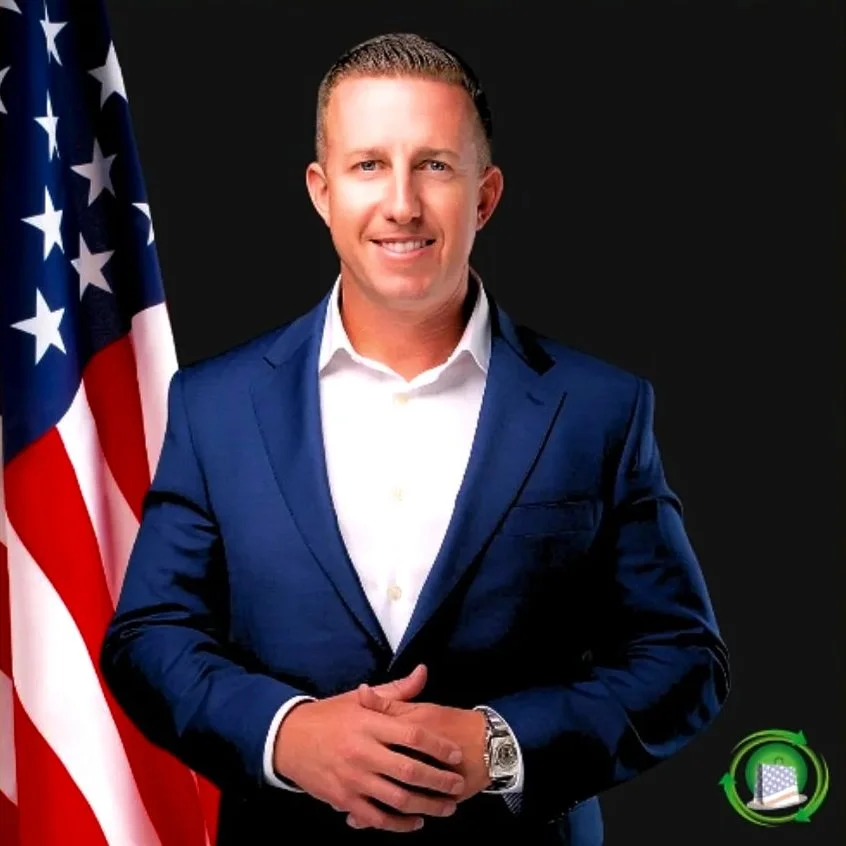
Retired U.S. Army First Sergeant Kevin D. Shoun
Senior Advisor | Civic Leadership and Policy Development
-
![A woman with blonde hair smiling in front of an American flag and a black background with a logo that says 'National Invest in Veteran Owned Business Week.']()
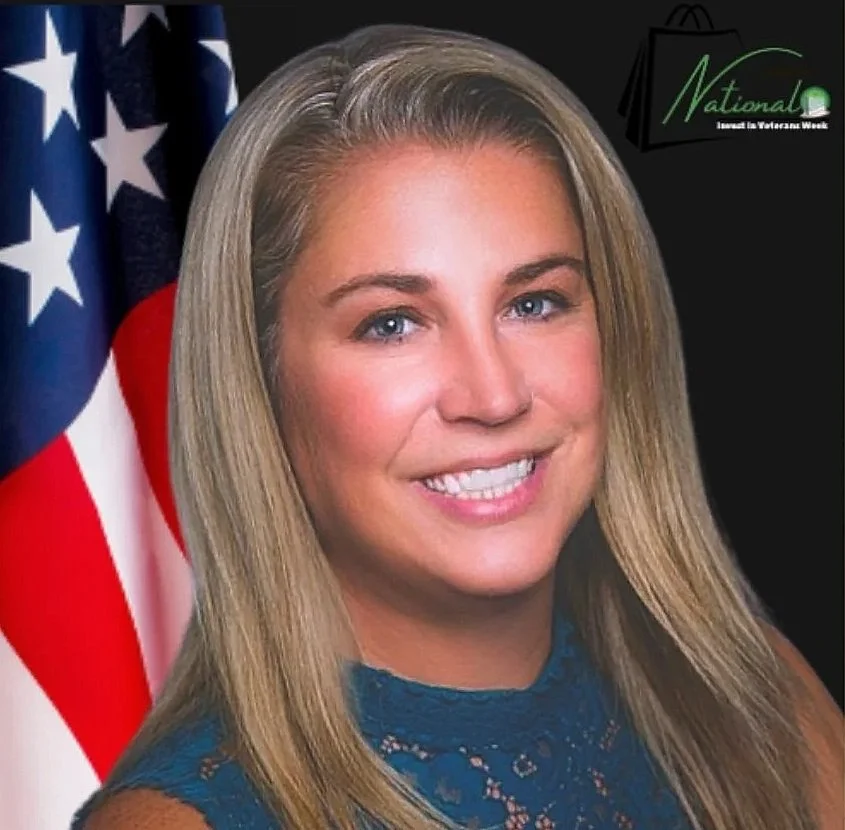
Sara Pomposo
Chief Advisor | Audience Growth & Strategic Syndication
-
![A man in a red shirt holding a music award trophy, standing next to a framed platinum record plaque on display, with framed posters and awards hanging on the wall behind him.]()
Jim Freeman of The Five Satins
GRAMMY Hall of Famer | Brand Ambassador
-
![A man with gray hair and glasses stands behind a music stand, speaking into a microphone while using hand gestures, against a dark background.]()
Pastor Ron Henson
Social Impact Advisor | Navy Veteran
-
![A man in a U.S. military uniform in front of an American flag.]()
LTC Rickey L. Pope USA, Ret.
CO-FOUNDER | Retired Army Veteran, Retired Firefighter
-
![A man in a gray blazer and shirt posing with arms crossed in front of a city skyline at dusk, with buildings and a bridge reflected in the water.]()
Jeff Shuford
CO-FOUNDER | Iraq War Veteran & Military Spouse
-
![Three men in a discussion in an office break room with black and white geometric wallpaper. One man with a beard, wearing glasses and a suit, is talking to a bald man wearing a black sweater, who is making a gesture with his hands. The third man with dreadlocks, dressed in a blue suit and holding papers, listens attentively.]()
Drayton Florence
CO-FOUNDER | NFL Veteran & Military Brat
-
![A smiling man with glasses, wearing a green sweater over a striped collared shirt, standing with crossed arms in an office space near a window, with framed certificates on the wall behind him.]()
Erik M. Pelton & Associates, PLLC
Trademark Attorney | Veteran IP Advocate
-
![A man in a green vest with a plaid shirt and bow tie standing in front of a booth labeled 'Body Aqua' at a trade show or expo.]()
CPT Sherman WIlliams, USA, Ret.
Advisor | Retired Army Veteran
-
![Two men in business suits having a meeting in an office with a window showing a city view, discussing a presentation on a laptop.]()
Brandon Sugar
Legacy UX/UI Designer | Army Veteran
-
![A young man with dark hair styled back, light eyes, and a light beard, wearing a blue suit and white shirt, looking at the camera.]()
Mike Bicek
Creative Director | Army Veteran
-
![A small brown and black puppy sitting on a red folding chair at the beach, with sunglasses and a colorful bag in the background.]()
Private Jewel
Co-Founders Pup | Biewer Terrier
-
![A smiling man wearing sunglasses and a striped white shirt.]()
Lonnell McCall I
Sr. Spokesperson | Retired Navy Veteran
-
![]()
Celeste Everett
Legacy IT Consultant | Army Veteran
-
![Composite image of three young men dressed as a graduate, a football player, and a young man in formal wear against a stadium background.]()
Lonnell McCall II
Jr. Spokesperson | Military Brat
-
![Close-up of a young man with dark brown hair, styled back, with light eyes, a light beard, and wearing a dark shirt, standing in front of a background with horizontal lines.]()
Christopher B. Mueller
Lead Video Spokesperson | Veteran Advocate







“As an educator committed to professional growth, I fully endorse National Invest in Veterans Week® for recognizing that veterans are vital economic assets who deserve tangible support in entrepreneurship and workforce development.”